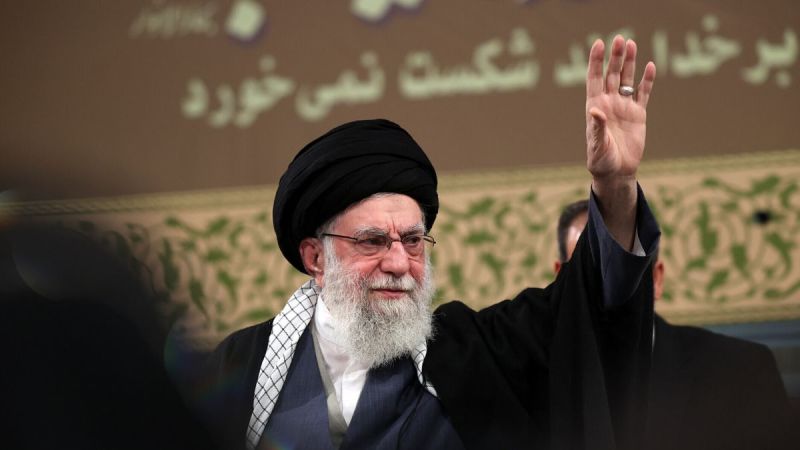
The Unprecedented Strike: How CIA Intelligence Paved the Way for the US-Israel Attack on Khamenei
The dawn of a recent Saturday marked a pivotal moment in Middle Eastern geopolitics, as a joint operation by the United States and Israel culminated in a precision strike on Tehran, leading to the confirmed demise of Ayatollah Ali Khamenei. While the announcements from President Trump and Prime Minister Netanyahu sent immediate shockwaves, the full story behind this unprecedented act of targeted leadership elimination is rooted deeply in months of meticulous intelligence gathering and a critical, last-minute tip-off from the Central Intelligence Agency (CIA). This complex operation, reportedly dubbed "Operation Epic Fury," was not merely a display of military might but a testament to the decisive power of actionable intelligence in shaping the course of international conflict.
The Architects of "Operation Epic Fury": A Joint Strategic Imperative
The successful execution of the strike against Ayatollah Ali Khamenei was the culmination of a sophisticated, months-long strategic partnership between US and Israeli intelligence and military forces. Experts in Middle Eastern affairs, such as Javier Gil, have highlighted the distinct yet complementary roles played by each nation in this intricate ballet of airpower and precision targeting. The United States, with its unparalleled aerial capabilities, focused primarily on dismantling Iran's crucial military infrastructure and armament facilities. This approach aimed to cripple the regime's capacity for conventional warfare and its support for regional proxies, thereby reducing its long-term strategic threats.
Simultaneously, Israel's operational mandate was more surgical, concentrating on identified locations suspected of harboring the highest echelons of the Iranian Islamist Regime's leadership. This division of labor allowed for a comprehensive assault that addressed both the structural power of the Iranian military and the strategic command and control of its ruling elite. The collaboration underscored a shared objective to significantly degrade Iran's ability to project power and influence, signaling a new era of proactive engagement against perceived threats. The very concept of such a coordinated cross-border strike, targeting a supreme leader, was audacious and required extraordinary levels of trust and intelligence sharing, ultimately shaping the entire
cia ataque jameneí narrative.
The Crucible of Intelligence: Months of CIA Surveillance
The foundation of "Operation Epic Fury" was laid not in fighter jet cockpits, but in the clandestine world of intelligence gathering. For months leading up to the attack, the CIA dedicated significant resources to an intensive surveillance operation tracking the movements and activities of Ayatollah Ali Khamenei. This wasn't a random watch; it was a systematic effort to map his routines, identify his secure locations, and understand the patterns of his engagements with key officials. The goal was to build a comprehensive intelligence picture, enabling analysts to predict with high confidence when and where Khamenei might be most vulnerable, and crucially, when he might convene with his inner circle.
This persistent monitoring, involving a sophisticated blend of human intelligence (HUMINT), signals intelligence (SIGINT), and advanced technical collection, sought to identify the "opportune moment." Intelligence agencies often describe this as the convergence of high-value targets in a single, accessible location, presenting a rare window for maximum strategic impact. The CIA's meticulous work involved sifting through vast amounts of data, analyzing communications, and piecing together fragmented information to construct a coherent narrative of Khamenei's operational environment. It was this deep, sustained intelligence effort that ultimately provided the crucial insights needed to transform a long-held objective into an actionable military plan. The long-term dedication to this surveillance underscores the deep strategic investment in understanding and countering the Iranian leadership.
A Last-Minute Revelation: The Game-Changing Tip
While months of surveillance provided the broad strokes, it was a precise, last-minute intelligence windfall from the CIA that truly defined the timing and lethality of the US-Israel strike. As the joint forces prepared for an anticipated night attack on Tehran, a crucial piece of information surfaced. The CIA relayed to Israeli intelligence a highly credible tip: Ayatollah Ali Khamenei was scheduled to hold a meeting with several top-ranking officials of the Islamist Regime at his residential complex the very next morning.
This intelligence was a game-changer. Rather than striking during the night, a decision was made to delay the operation until Saturday morning. This strategic adjustment was made possible by the certainty that Khamenei, along with a significant portion of the regime's leadership, would be gathered in one location. Such an opportunity, to eliminate multiple high-value targets in a single, surgical strike, is exceedingly rare in intelligence-led operations. The precision of this
delayed attack: CIA's last-minute tip trapped Khamenei and top brass and its direct impact on the number of casualties underscores the critical role of timely, accurate intelligence.
The confirmed casualties from this meeting attest to the intelligence's accuracy and the strike's effectiveness. Among those confirmed dead were Mohamed Pakpur, Commander of the Revolutionary Guard; Aziz Nasirzadeh, Minister of Defense; General Abdorrahim Musaví, Chief of Staff of the Iranian Armed Forces; Ali Shamjani, Secretary of the Defense Council; and Mohamed Shirazi, Chief of Khamenei's Office. This single intelligence breakthrough transformed the scope of the operation, turning a planned attack into a devastating decapitation strike against the core of Iran's leadership.
Precision and Execution: The Dawn Strike on Tehran
With the critical intelligence in hand, the operational phase of "Operation Epic Fury" commenced with chilling precision. At approximately 6:00 AM Israel time (04:00 GMT), Israeli combat aircraft lifted off from their bases, embarking on a mission that would redefine targeted operations. The objective was clear: the residential complex of Ayatollah Ali Khamenei, where the high-level meeting was underway.
The strike itself was characterized by its efficiency and concentrated power, requiring "few aircraft, but very well armed," as reported. Around 9:40 AM local time (6:10 GMT), long-range missiles delivered their payload, striking the complex with devastating accuracy. Intelligence had pinpointed that Iranian defense and security officials were convened in one building within the sprawling complex, while Khamenei himself was located in another. This detailed understanding allowed for specific targeting, maximizing the impact on the regime's command structure.
Following the initial strike on the leadership complex, the operation extended to other locations where additional Iranian intelligence officials were known to be present. These follow-up bombardments further underscored the comprehensive nature of the intelligence picture gathered by the CIA and its partners, ensuring that a wider network of key figures was neutralized. The entire operation was a stark demonstration of how intelligence, when married with advanced military capabilities, can achieve strategic objectives with remarkable swiftness and precision. For a deeper dive into the military specifics, see
Khamenei's Demise: Inside the Joint US-Israel Precision Strike.
Beyond the Headlines: The Implications of Targeted Leadership Strikes
The US-Israel attack on Ayatollah Ali Khamenei, fueled by critical CIA intelligence, extends far beyond the immediate headlines. The elimination of a supreme leader, alongside a significant portion of his top brass, carries profound strategic implications for Iran, the Middle East, and the future of targeted operations.
For Iran, the immediate challenge is one of succession and stability. Khamenei's decades-long tenure provided a consistent, albeit hardline, direction for the Islamic Republic. His sudden removal, along with key military and defense figures, creates a power vacuum and a potential crisis of legitimacy. The intricate processes of succession, often shrouded in secrecy, will now be under intense scrutiny, with potential for internal power struggles and shifts in policy. The capacity of the Revolutionary Guard and other security apparatuses to maintain control without their established leadership will be tested. This event will undoubtedly force a reevaluation of command structures and security protocols within the Iranian regime, exposing vulnerabilities that were previously unseen.
From a broader strategic perspective, this operation sends an unequivocal message about the capabilities and resolve of the United States and Israel. It demonstrates a willingness to employ highly precise, intelligence-driven operations to neutralize perceived threats at the highest levels of adversarial governments. This could reshape deterrence calculations for state and non-state actors alike, highlighting the escalating risks associated with certain foreign policy decisions.
**Practical Takeaways on Modern Intelligence Operations:**
* **The Blend of Intel:** This operation highlights the indispensable fusion of long-term strategic intelligence (understanding patterns) with short-term, actionable tactical intelligence (the last-minute tip).
* **Technological Sophistication:** Precision strikes of this nature are only possible with advanced surveillance technologies, sophisticated data analysis, and highly capable weapon systems.
* **Human Element Remains Key:** Despite technological advancements, the "human" element in intelligence—analysts piecing together clues and agents verifying information—remains crucial.
* **Risk and Reward:** Such high-stakes operations carry significant geopolitical risks, but when successful, can yield substantial strategic rewards, altering the power dynamics of an entire region.
The attack on Khamenei underscores an evolving landscape of modern warfare, where intelligence agencies play an ever-more central role in shaping military outcomes and international relations.
Conclusion
The joint US-Israel attack that led to the death of Ayatollah Ali Khamenei was a watershed event, meticulously planned and executed, with the Central Intelligence Agency's intelligence proving to be the linchpin. From months of painstaking surveillance that established Khamenei's patterns to the crucial, last-minute tip-off about a high-level meeting, CIA intelligence didn't just inform the operation; it decisively shaped its timing, target selection, and ultimately, its strategic success. This extraordinary display of intelligence gathering, analysis, and strategic coordination resulted in a precision strike that not only eliminated a formidable adversary but also sent a powerful message across the geopolitical spectrum, underscoring the indispensable role of intelligence in modern conflict. The ripple effects of this operation will undoubtedly be felt for years to come, profoundly impacting the trajectory of the Middle East and the future of international power dynamics.